

Environmental rights in Croatia: An ongoing battle for sustainability and justice
Croatia, with its rich natural landscapes and diverse ecosystems, has long been a battleground for environmental advocacy. Organizations like the Brod Ecological Society (‘Brodsko Ekološko Društvo’ – BED) have been at the forefront of efforts to protect communal land and biodiversity while grappling with systemic barriers that hinder environmental rights. Through the lens of BED’s history and ongoing struggles, we sat down with the organisation’s executive director, Iris Beneš, to reflect on the intersection of environmental justice, governance, and grassroots activism in Croatia.
The origins of environmental advocacy in Croatia
Founded in 1989, BED emerged from a group of citizens concerned about environmental issues in what was then Yugoslavia. Among the key figures in its establishment was Iris Beneš’s father, reflecting the deeply personal connection many members have with their cause. BED initially focused on protecting flooded pastures vital for biodiversity, becoming the de facto guardians of these ecosystems in the absence of strong state institutions.
“For the first 20 years, we were only volunteer-based,” Beneš recalls. “We have done so many things and yet so few people know about us.”
This sentiment underscores the challenge that many environmental organizations face—not only in advocacy but also in visibility and public recognition.
The commons’ struggle: traditional land rights and governance
One of BED’s most significant efforts has been the fight to preserve traditional communal land use, particularly on Gajna, a protected pastureland and one of the last examples of common governance in Croatia. BED has been instrumental in adapting traditional governance models to the modern legal framework, ensuring that communal pastures remain managed by local farmers rather than private or state-controlled entities.

Historically, Croatian farmers managed common pastures through unwritten community rules. However, the transition to state-controlled land ownership and later privatization efforts disrupted these practices. The result was a bureaucratic nightmare in which farmers on communal lands were excluded from agricultural subsidies, forcing BED into a decade-long advocacy battle to amend the Agricultural Land Law.
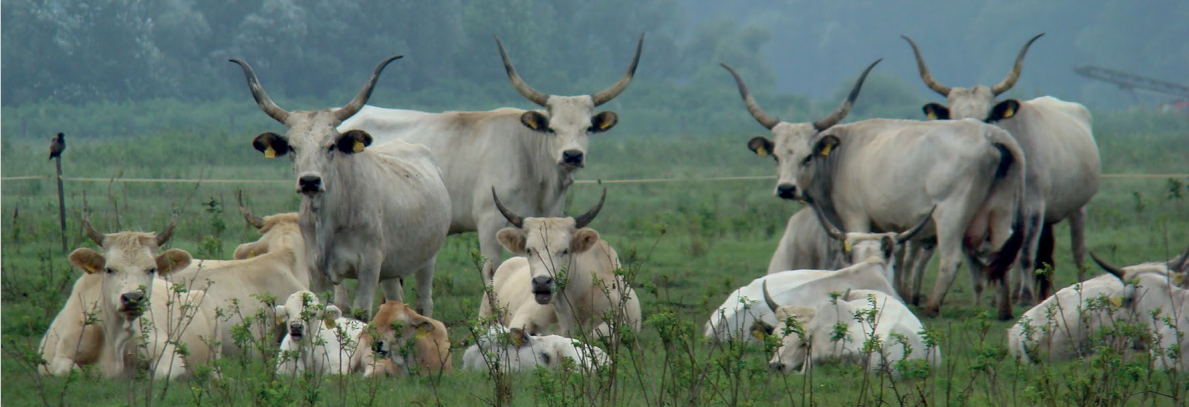
BED also played a key role in the establishment of the Pasturing Community of the Eko-Gajna cooperative, helping farmers secure legal recognition for their communal grazing rights. A major breakthrough in sustaining these pastures came with the reintroduction of native cattle breeds. BED facilitated the return of longhorn cattle, which were once integral to the region’s agricultural system but had nearly disappeared due to modern farming practices.
The initiative not only helped restore biodiversity and maintain the pasture’s ecological balance but also provided an economic and social lifeline for many local war veterans. “It’s better for veterans to look under a cow’s tail than at the bottom of a bottle,” Beneš recalled her father saying, emphasizing the rehabilitative potential of traditional farming. By supporting cattle breeding cooperatives, BED enabled veterans to participate in sustainable agriculture, offering them a structured livelihood that connected them to their land and community.
Environmental advocacy amidst political resistance
BED’s work has not been without resistance. Local political figures and influential landowners, seeing potential for personal gain, sought to undermine the cooperative’s efforts. In one particularly alarming incident, Beneš’s father was physically attacked—an act that epitomizes the dangerous nature of environmental activism in Croatia. “It was like something out of a movie,” Beneš recounts, emphasizing the personal and political pressures activists face.
Despite these obstacles, BED successfully challenged a government tender that awarded communal land to a private agribusiness, securing a five-year lease for the cooperative. This victory was achieved through persistent legal advocacy, engagement with ministries, and public awareness campaigns. Yet, as Beneš acknowledges, the battle is ongoing:
“This is not a fight that has been won, but temporarily, yes – we have won the battle.”
‘People for Nature, Nature for People’
BED’s latest project, People for Nature, Nature for People, under the umbrella of the European Union funded “Catalyst of Change” project, aims to raise awareness about the importance of communal land governance and sustainable environmental practices. The project seeks to enhance visibility for BED’s 35 years of work, engage new volunteers, and highlight the link between traditional agricultural practices and biodiversity conservation. Given the region’s aging population and the presence of many war veterans, the initiative also hopes to foster greater community participation by showcasing the role of sustainable land management in preserving livelihoods.
The path forward: policy and grassroots mobilization
Looking ahead, the key challenge for environmental organizations in Croatia remains strengthening the legal framework for environmental rights and ensuring sustained funding. BED’s latest project focuses on policy advocacy, addressing the shrinking space for civil society organizations and the increasing difficulty in securing financing.
At the same time, the organization remains committed to its grassroots mission—educating young people, preserving biodiversity, and promoting sustainable agricultural practices. The broader question, however, remains whether similar cooperatives can emerge elsewhere in Croatia. While BED’s model is theoretically replicable, Beneš hesitates to recommend it to others, given the immense personal and institutional challenges involved. “I would never recommend everything that we’ve gone through to somebody with a clear conscience,” she admits.
A need for stronger environmental protections
The story of BED is one of resilience, community-driven advocacy, and an unrelenting fight against systemic barriers. As Croatia continues to navigate its environmental policies and governance structures, the lessons learned from BED’s experience are invaluable. Stronger legal protections, greater institutional support, and a shift towards recognizing the importance of traditional ecological knowledge are essential steps forward. Ultimately, environmental rights in Croatia are not just about conservation—they are about justice, sustainability, and the right of communities to manage their land in harmony with nature. The deep interconnection between environmental, social, and economic well-being encapsulated in BED’s story is a lesson that extends far beyond Croatia’s borders.
Brod Ecological Society (BED) is a key grassroots partner in the European Union-funded Catalyst of Change: Supporting a Vibrant Civil Society in Europe project. Through this initiative, BED continues its fight for environmental justice, advocating for sustainable land governance and community-driven conservation in Croatia. The Catalyst of Change project strengthens civil society organizations working on environmental rights, women’s rights, and anti-corruption across Croatia, Bulgaria, Portugal, Romania, and Slovenia, ensuring they are better equipped to promote EU values, withstand external pressures, and respond swiftly to challenges affecting civic space.
Please note that all views expressed in this article are solely that of the Netherlands Helsinki Committee and do not necessarily reflect the view of the EU.