
Strengthening Victim-Centered Justice in Ukraine: PRAVA Partners Hold Strategic Meeting in The Hague
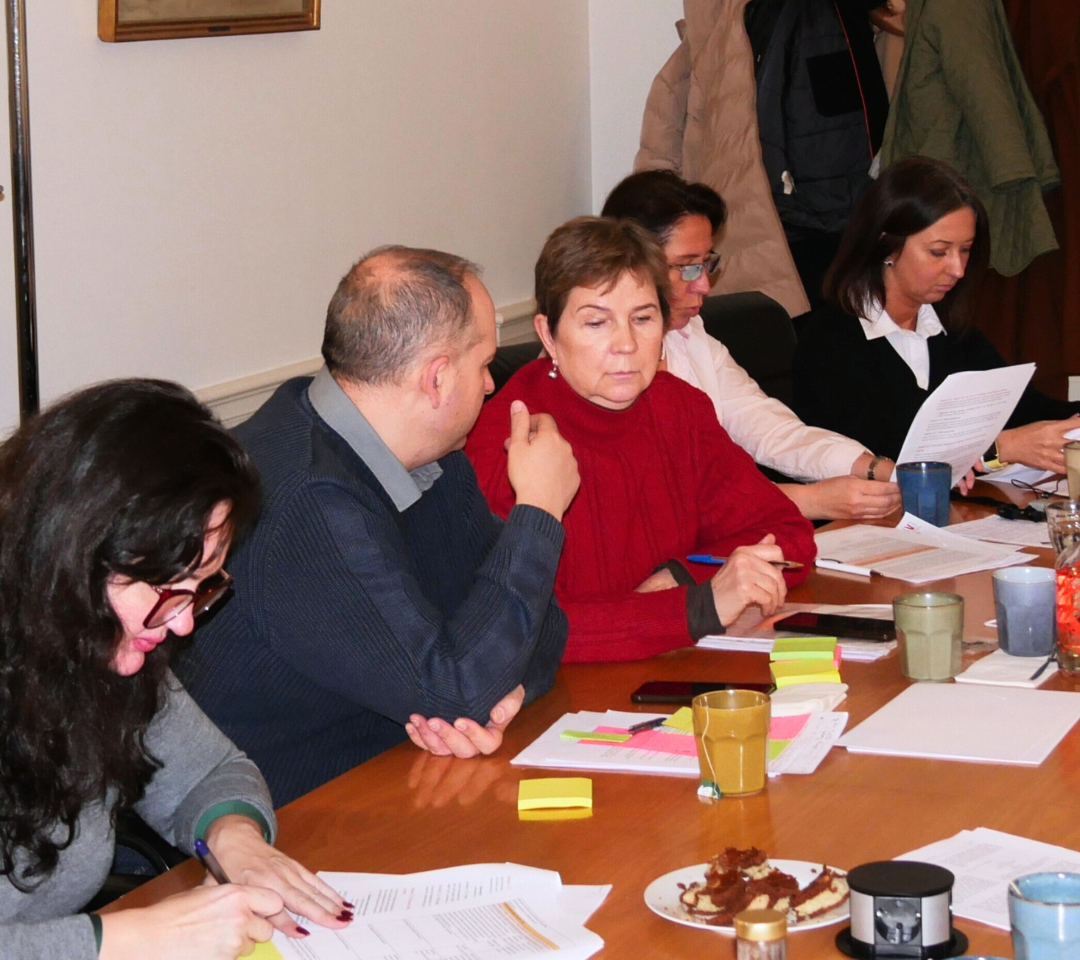
From 03 to 05 December 2025, key stakeholders and members of the steering committee of our ‘PRAVA’ project (2025–2029) gathered in The Hague for three days of strategic discussions and visits to judicial institutions. ‘PRAVA’ is funded by the Netherlands Ministry of Foreign Affairs through the Matra Government to Government (G2G) programme, with the Netherlands Enterprise Agency (RVO) acting as the implementing agency for the grant. Participants included Ukrainian partners from the Eastern Ukrainian Center for Civil Initiatives, the Ukrainian Helsinki Human Rights Union, the Victim and Witness Coordination Centre, and a judge from the Desnianskyi District Court of Kyiv. From the Netherlands, representatives joined from Studiecentrum Rechtspleging (SSR), Slachtofferhulp Nederland, and Parket–Generaal.
‘PRAVA’ aims to strengthen judicial institutions and safeguard victims’ rights in Ukraine as the country advances its commitment to democracy and the rule of law. Drawing on Dutch experience, the project promotes victim-centered justice and alignment with EU standards. ‘PRAVA’ focuses on the rights of victims who have experienced ordinary crimes during times of war, such as domestic violence, sexual violence, as well as other serious crimes. Find out more about the project’s partners and aims here.

Exchanging Knowledge and Shaping Future Priorities
The meetings were marked by insights and knowledge-sharing discussions. Veronika Plotnikova, Head of the Coordination Centre for Victims and Witnesses at the Office of the Prosecutor General of Ukraine, reflected on the organisation’s progress in supporting beneficiaries and establishing victim and witness coordination units in war-affected regions.
Furthermore, Veronika emphasised the importance of international coordination. She explained that Victim and Witness Coordination Center is working with the EC Coordinator for Victim’s Rights to make sure Ukraine’s priorities are reflected in the upcoming amendment of the Victims’ Rights Directive. Veronika added that special attention should be given to transnationality, given that many Ukrainian victims are now living abroad.
Moreover, Robin Fontijne from Slachtofferhulp Nederlands shared insights into how his organisation approaches victim support, including best practices and methods. He described how Slachtofferhulp Nederlands organises several kinds of survivor groups. Some groups are based around particular crimes, while others are organised around shared experiences, such as shame or stigma. Ukrainian partners found this approach particularly interesting, and were keen to learn more .

On Thursday, the focus was on observations of criminal cases involving victims of serious crimes. The group visited the Court of the Hague to observe a multi-judge panel hearing. In the afternoon, the group met with Brechtje van de Moosdijk, Spokesperson of the National Public Prosecution Service, and Magda Koole, an Appellate Judge from The Hague Court of Appeal. They exchanged views on challenges and lessons learnt within prosecution and judicial processes.
The meeting concluded with group discussions and strategic planning focused on the future direction of the project. All partners collaborated toward a shared goal: safeguarding victims’ rights in Ukraine.