
Building Knowledge, Bridges, and Solutions: The Matra Rule of Law Training Programme
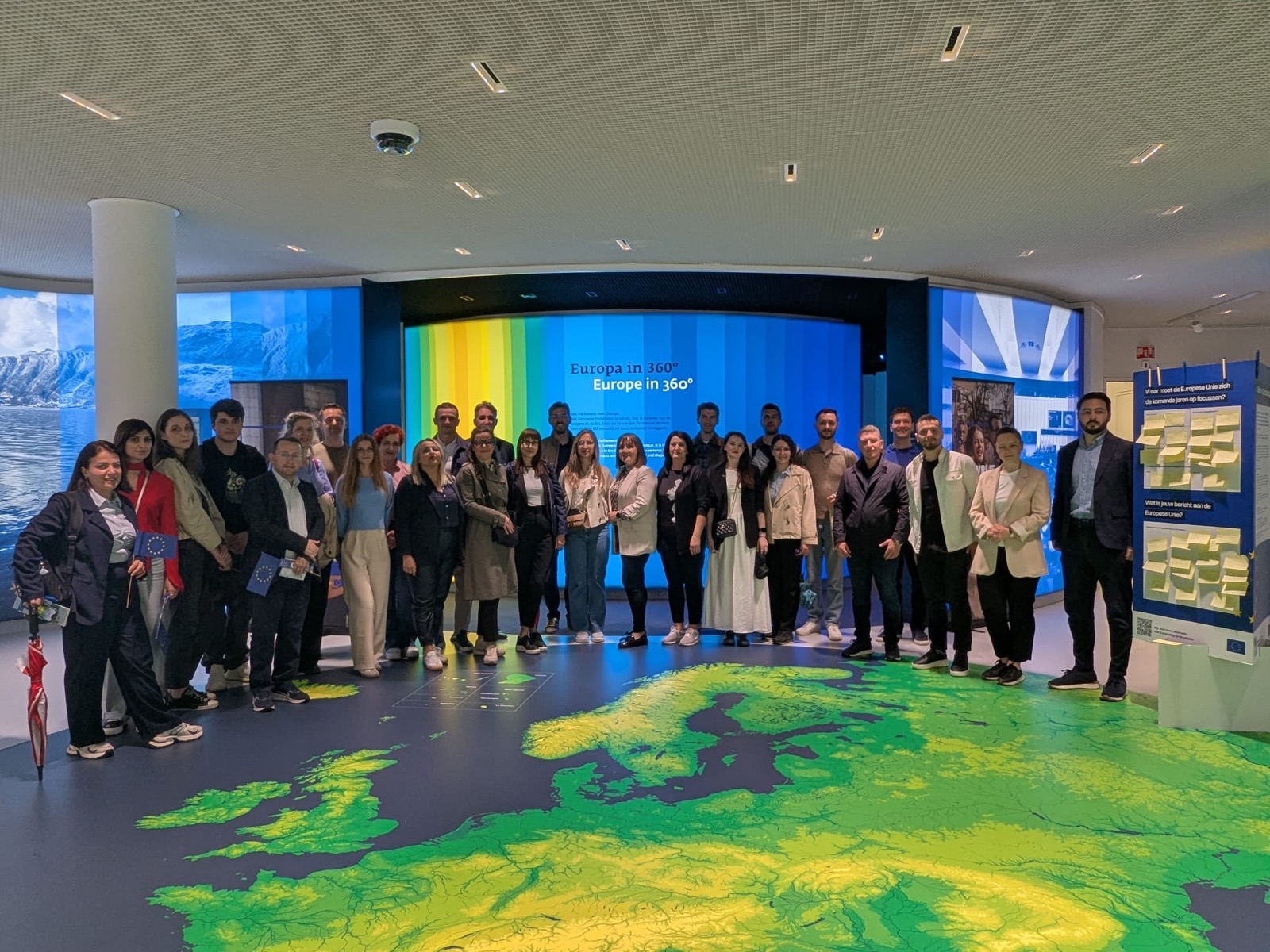
This June, 27 civil servants and judiciary representatives from Albania, Armenia, Bosnia and Herzegovina, Kosovo, Moldova, Montenegro, North Macedonia, Serbia, Türkiye, and Ukraine visited The Hague for the Matra Rule of Law Training (Rolt) Programme on Judicial Cooperation.
The Rolt Programme is designed to strengthen the rule of law within government organisations, allow for knowledge exchanges between countries, and strengthen cooperation. This benefits participating countries, the Netherlands, and the rule of law in wider Europe.
Together with Leiden Law School and The Hague Academy for Local Governance, the Netherlands Helsinki Committee offers seven Rolt trainings each year, encompassing topics such as the management of borders, public services, human rights, and democratic institutions.
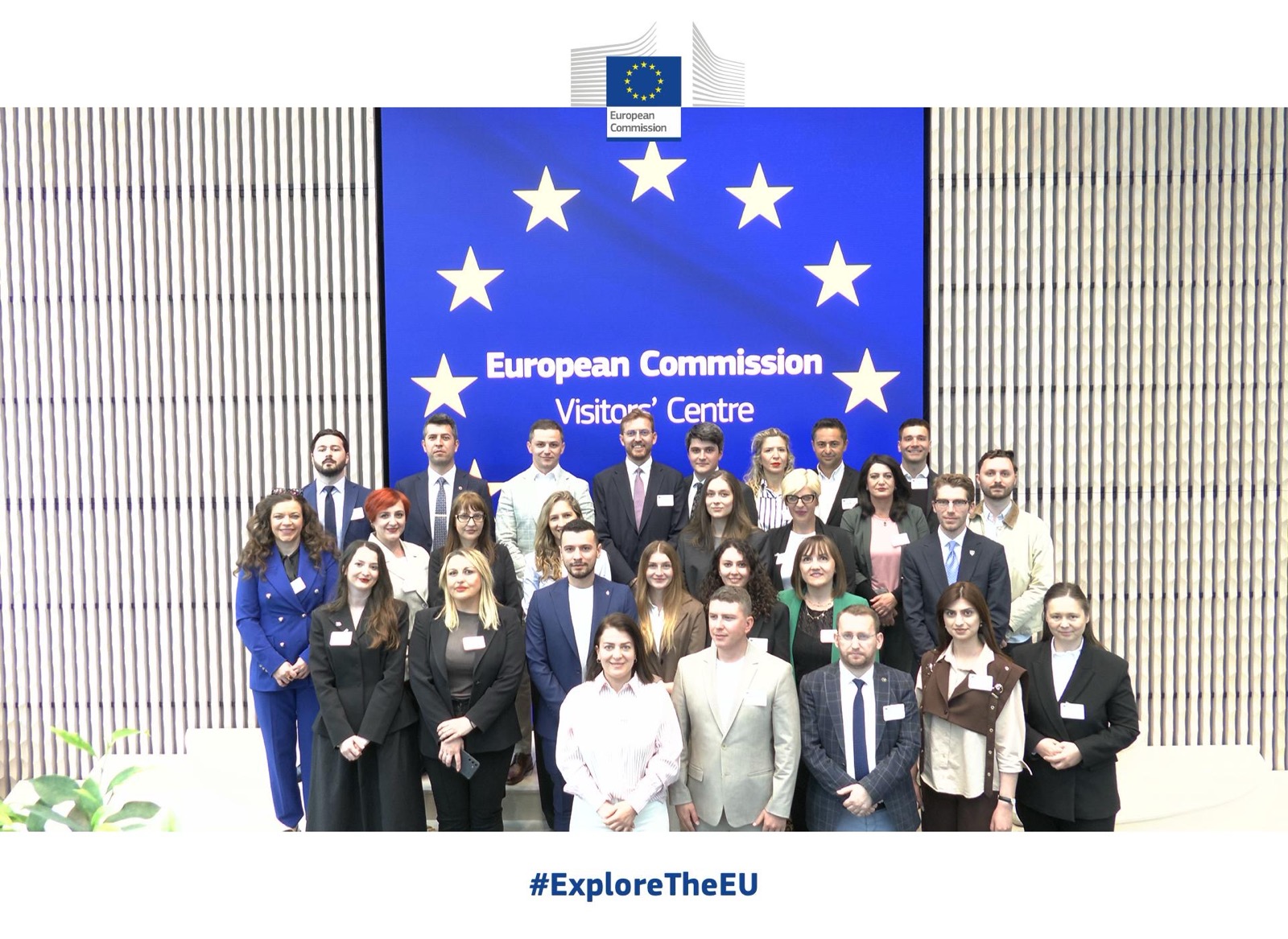
In June, we hosted the judicial cooperation training, which illuminated how the EU and its (candidate) member states cooperate to fight crime, from prosecution and conviction to rehabilitation. During their two-week stay, participants received an overview of the policies, mechanisms, and institutions that facilitate and strengthen judicial cooperation within the EU. They attended training sessions on European arrest warrants, financial crimes, and alternative sanctioning, and visited the ICC, Eurojust, and the European Commission.
Exchanging Knowledge
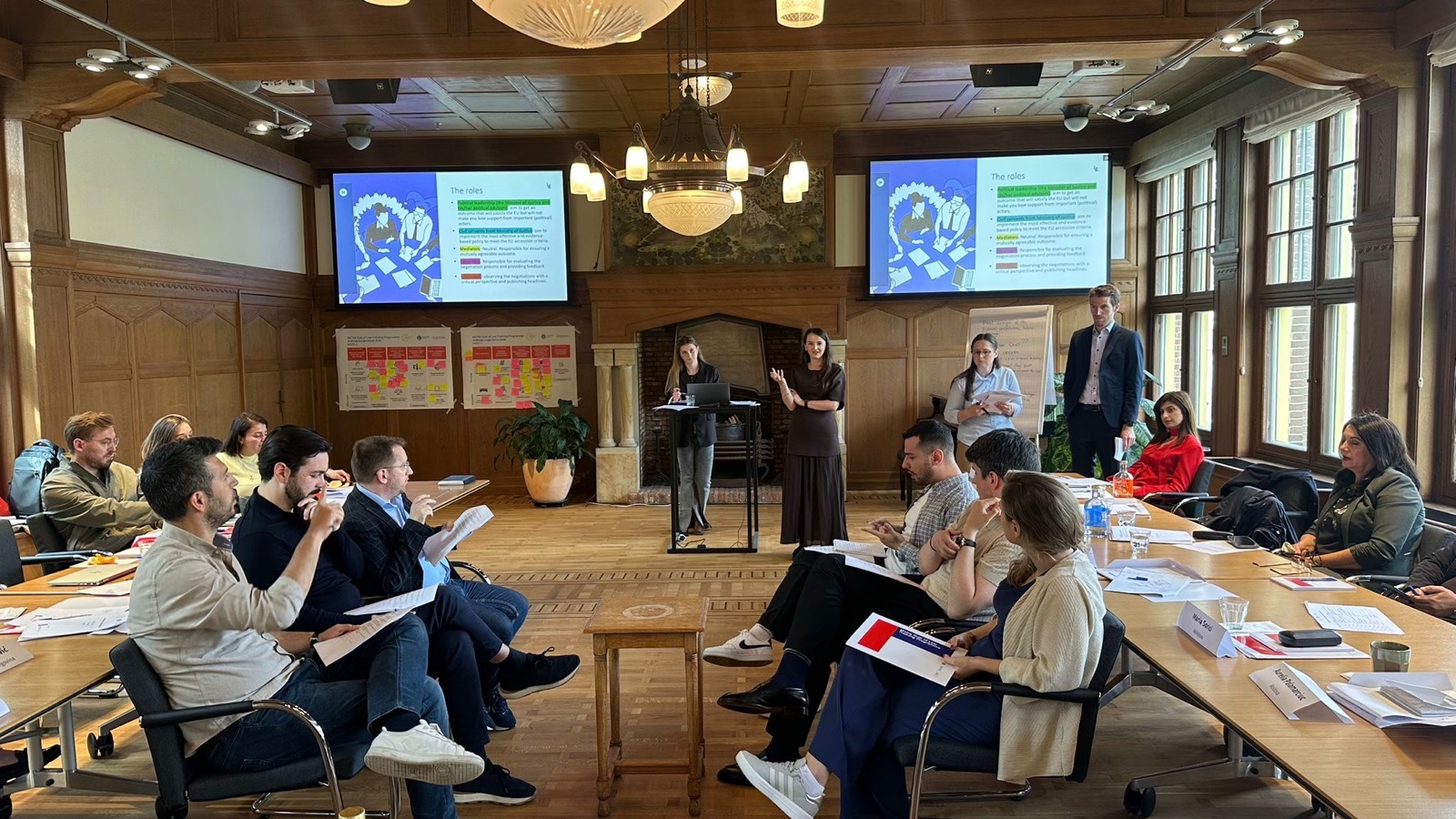
Presentations on the Dutch and EU approach encouraged the participants to reflect on the situation in their own country, to identify areas for reform, and discuss best practices in each other’s countries.
For instance, Anna Fedorova, a Judicial Assistant at the Ukrainian High Anti-corruption court, detailed her desire to employ FCInet, a platform hosted in the Netherlands that allows institutions to share financial data while protecting privacy rights, in Ukraine. She said “it was super useful to learn about the FCInet platform for Ukraine, for the judicial system, for investigators, for prosecutors, for anyone whose involved in that system. It currently takes a lot of effort and time to get data from another institution. It’s an amazing system and I would like to see it in Ukraine.”
Similarly, Dražen Milićević, a Deputy Public Prosecutor from Bosnia who is partaking in the Rolt programme for the second time, expressed enthusiasm about the ZSM, a fast-track approach for petty crime by the Dutch public prosecutor’s office. Milićević said, “if I could take one thing to Bosnia and implement it, it would be this.”
The ZSM approach gathers the members of relevant law enforcement, prosecution, victim-support, and probation institutions in one location. This allows for quick cooperation and decisions made in the interests of victims, perpetrators, and society on the whole. Detailing the years of backlog on petty crime cases in Bosnia, Milićević claimed, “if we could handle them like how you do here… it’s beautiful. It is tailormade, efficient, effective, and you have that much more time to work on more serious crimes.”
Marina Beun and Leontien Kuijer, experts from the Dutch Public Prosecution Service and Probation Service, who presented on the ZSM as well as sentence transfers, which allow people incarcerated abroad to serve their sentence in their countries of residence or origin, noted the importance of sharing best practices.
“The Dutch rehabilitation system has existed for over 200 years, so comparatively, the systems in other countries are still very young. Because we’ve been doing this for so long, we have a responsibility to share what we’ve learned and help others.”
That said, the Rolt programme is not a one-way knowledge exchange. Beun and Kuijer noted that these trainings offer valuable insights for Dutch practitioners into how the participants’ judicial systems operate. Beun said, “It is only when you get to talk to practitioners from these countries, that you realize that certain practices or institutions that we take for granted may not be in place there.” Getting an accurate overview of the sentencing process in another country, allows for a more tailored approach to transferring those sentences, benefitting the Netherlands and its incarcerated citizens abroad.
Strengthening Bonds
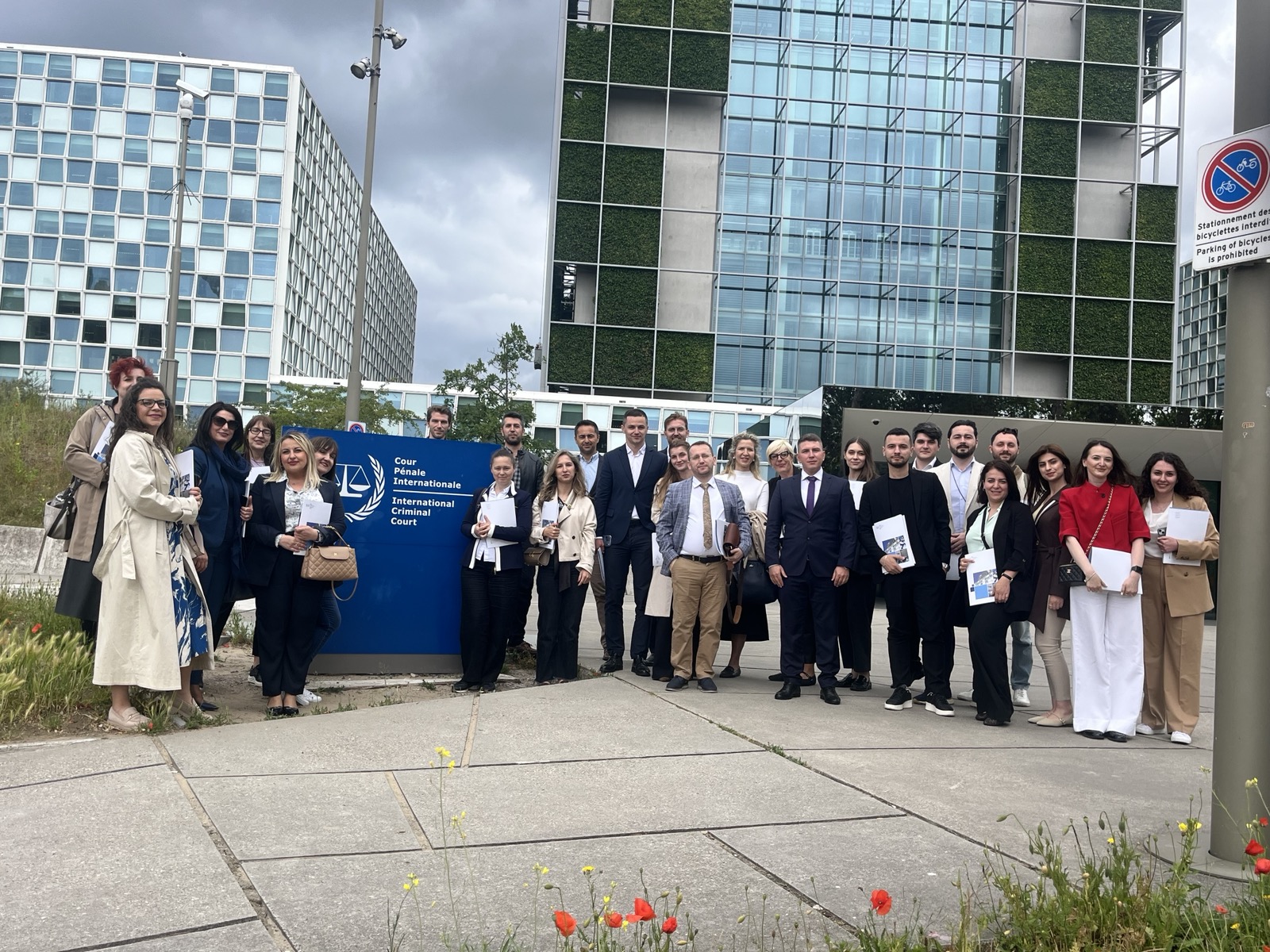
Beyond the knowledge exchange between participants and experts, participants and the countries they serve also benefit from the bonds they form with other participants during the Rolt trainings.
Within the Ukrainian team, Fedorova said, “From my perspective, working in court, it was great because I can now directly communicate with my colleague” (and fellow participant) “Anatoli from the Ministry of Justice. For instance, when we do an MLA request and send it to the Central Authority within the Ministry of Justice, we have that connection. It is good for our inner communication.”
But, as two-time Rolt alumni Milićević mentioned, the Rolt training also allows for connections between countries to be formed.
“The benefit of groups like this is networking always. Because even the last time I was here, when you know people and you spend so much time together, it is that much easier to connect directly if you need something. For example, if I need something in Türkiye, I am going to ask my colleague from Türkiye, just help me, just point me in the right direction. That saves time.”
Bringing Back Change
On top of the knowledge and networks gained in The Hague, participants also return home with solutions. In line with the programme’s focus on practical implementation, participants develop projects that strengthen the rule of law in their respective countries.
As part of the Ukrainian team, Fedorova plans to develop a checklist and a comparison between the current and future warrant filing process for use in trainings on European Arrest Warrants (EAWs) as part of her country’s road toward EU membership.
To facilitate a successful transition to European integration, Fedorova said, “we are going to raise the awareness of judges and prosecutors, the people who would work on the new procedure in the future, because we do not want anyone to be confused. We’re going to prepare them for a smooth transition.”
Simultaneously, the Bosnian team focused on developing a training for judges and prosecutors on Mutual Legal Assistance (MLA) requests, a foundational mechanism of judicial cooperation that allows judiciaries to work together across borders.
Given the highly formalized nature of MLA’s, judges and prosecutors can make small mistakes that can result in requests for clarifications or even flat-out refusals. These small procedural mistakes, Milićević said, “can seriously impede your investigation. Ask me how I know!”
“We were thinking: what can we do within our sphere of influence? We are both trainers for the Judicial Academy, and we know the Directors of the Centres for Education who provide trainings to the entire country’s judiciary.” So, the Bosnian team decided to develop a training “that does not take much money, just our time and effort.”
As a result of their connections, bolstered expertise on MLAs from the Rolt sessions, and the low cost of developing the training, Milićević said that training their entire country’s judiciary to produce effective MLAs, “is not something that’s fantasy, it’s feasible.”
Beun and Kuijer expressed their enthusiasm about these pilot projects and emphasized the importance of starting small. Kuijer said, “Our system was not built in one day. You have to start small. If the pilot works, see if you can market it, collaborate with other institutions, and advocate for expanding it. How it works here, in the Netherlands, that has also grown with time.”
Now that participants have returned to their countries, they will join the 1600-person Rolt alumni network in strengthening the foundations of the rule of law, step by step, to the benefit of their countries, the region, and fundamental rights everywhere.
The Matra Rule of Law Training Programme is designed and delivered by the Netherlands Helsinki Committee, Leiden Law School, and The Hague Academy for Local Governance. The programme is commissioned by the Ministry of Foreign Affairs of the Netherlands, and implemented by the Netherlands Enterprise Agency (RVO) on behalf of the Ministry.