
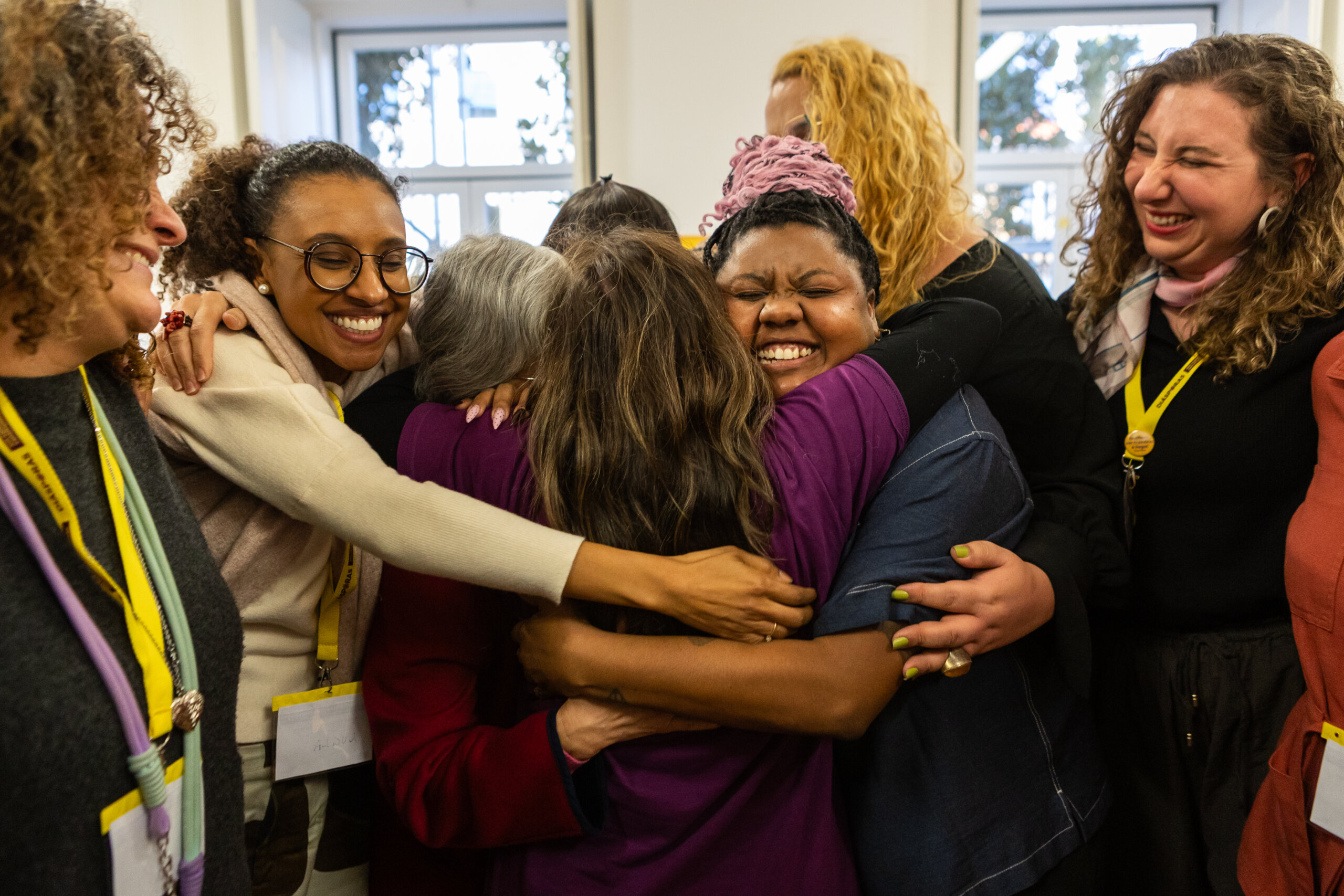
One of the most important lessons we have learned in our work with women is the importance of sustaining community and circular spaces. Transformations rarely happen in isolation. In our last meeting, one of our participants said she felt a kind of ‘magic’ happening. We understand this as something very material: when women have safe spaces to speak, listen, reflect, and build together without rigid hierarchies and with mutual care, something powerful happens.
Stories are shared, knowledge is exchanged, confidence grows, and collective strategies to confront inequalities begin to emerge. It is in these spaces, supporting one another, that many women begin to recognize the value of their own voices and step into spaces of decision-making, advocacy, and mobilization.
Creating and sustaining these spaces is not simple, especially when working with migrant women, whose experiences are shaped by multiple layers of inequality and by the lack of recognition of their lives and histories. Yet, and precisely for this reason, these spaces become even more necessary and powerful for strengthening rights, solidarity, and social change.
IWD 2026: Our Catalyst Partners Advancing Women’s Rights
Across countries and contexts, our partners from the EU-funded Catalyst of Change project are working hard to advance women’s rights. On International Women’s Day 2026, we asked them a few questions about their work, the challenges they face, the lessons they’ve learned, and what gives them hope. Today, we’re sharing their voices.
To get a sense of what inspires our Catalyst partners, we asked the Endometriosis Foundation, our third call partner from Bulgaria:
What motivates your work in advancing women’s rights?
The Endometriosis Foundation raises awareness and supports women affected by endometriosis and other reproductive health conditions. It works to improve the quality of life through education, advocacy, and access to care. The foundation shares clear information, builds supportive communities, partners with medical professionals and institutions, and advocates for patient rights. Its vision is a society of mutual support where women’s health is a priority.
Our foundation aims to close the gender health gap in Bulgaria. We support women with endometriosis and other reproductive health conditions. Each week, we speak with hundreds of women and girls, equipping them with knowledge, strengthening their confidence to speak up, and giving them tools for self-advocacy and better communication with medical professionals.
At the same time, we bring patients’ voices to the medical community. These are stories of hidden or dismissed pain. Years of suffering in silence can lead to delayed diagnosis, medical uncertainty, missed opportunities, and impacts on school, work, or social life.
Pain, especially period and gynecological pain, is still a taboo topic. That is what drives our work. Our mission is simple: no girl or woman should suffer in silence, unsupported, or unheard.
Hearing from the Endometriosis Foundation reminds us how much effort organisations put into advancing women’s rights, and how it all comes from a shared wish to make life better for women. It also shows that there is still much work to be done. We then asked our third call Catalyst partner from Slovenia, ONA VE:
What is one urgent challenge women are currently facing in your country?
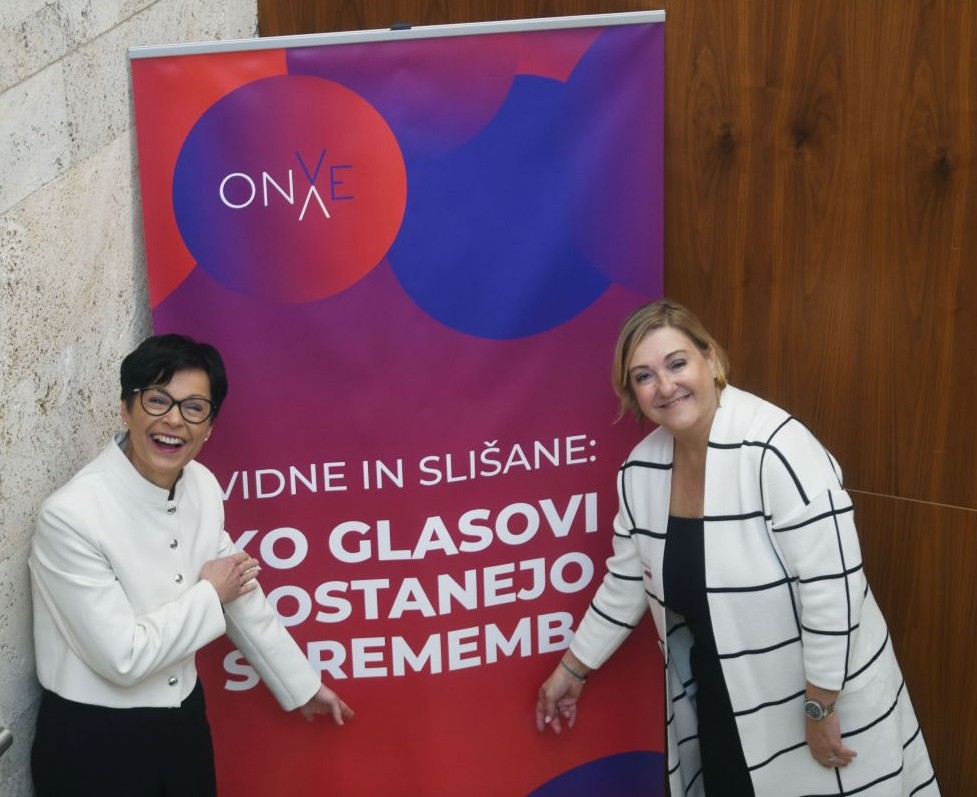
ONA VE is a non-profit association working to increase women’s presence and visibility in the media and at national public events. The team advocates for the visibility of women, trains female experts for public appearances, and brings the issue of underrepresentation to the forefront. ONA VE’s goal is to promote gender-balanced representation in the media and reach a 50–50 ratio so women are no longer absent from expert panels.
One urgent challenge is the persistent underrepresentation of women in the media. What is visible in the media and online increasingly shapes public discourse and gradually spills over into all areas of society. From ONA VE’s point of view, systemic intervention is needed: if media receive public funding, they should also be required to monitor and uphold gender equality—for example, by measuring the presence and roles of women in their content and ensuring more balanced representation.
Seeing the persistent effort of our partner organisations, even in these challenging times, we wanted to ask them:
What gives you hope right now?
Our 3rd call Catalyst from Bulgaria, the Counterintuitive Institute, shares their perspective.
The Counterintuitive Institute is a female-led organisation that challenges the status quo to promote positive social change. Drawing on lived experience, it develops practical solutions that address gaps in policy and impact, working closely with communities and partners in Bulgaria, across the EU, and beyond. Through this approach, the Institute mobilises communities, amplifies voices, and contributes to building a fairer world guided by inclusivity, courage, creativity, empathy, ethics, and perseverance.
What gives us hope is seeing every day the dedication and love of those who work with survivors of violence, as well as the resilience of the survivors themselves. We remain inspired by women who refuse to be silenced, no matter what challenges and threats they face. Hope lives in the communities of care and solidarity we build and join across borders. It thrives in the hard-won victories that prove change is still possible when we are brave and determined.
The sense of hope rooted in people and community is echoed by the Romanian Midwives Association, another 3rd call Catalyst partner.
Romanian Midwives Association is a grassroots women’s rights organisation committed to universal access to sexual, reproductive, maternal, newborn, and adolescent health. It empowers midwives as autonomous professionals and advocates for policies that uphold women’s rights, gender equality, and dignity. The association works to improve healthcare transparency and supports communities facing social and environmental inequities. It aims to ensure justice, participation, and equal opportunities for all women.
What gives us hope right now is seeing more women and young people in Romania speaking openly about their bodies, their health, and their rights. Through our work with midwives and communities, we witness how respectful, evidence-based care empowers women to make informed decisions. The need for skilled midwives is immense, and every day we see this confirmed as beneficiaries share their experiences. As one participant said, “I realised the extremely important role midwives play for future generations of children and mothers.” Every conversation, training, and community initiative reminds us that change is possible when women are supported, informed, and heard.
Across all these stories, one message stands out: progress in women’s rights is built on solidarity, community, and determination. From improving health and representation to creating safe spaces and advancing advocacy, our Catalyst partners show that lasting change happens when people work together and support one another. Their dedication reminds us that every effort counts and that, together, we can build a fairer and more inclusive world.