
Civic Space Under Pressure: Reflections from the Launch of the MACS Report
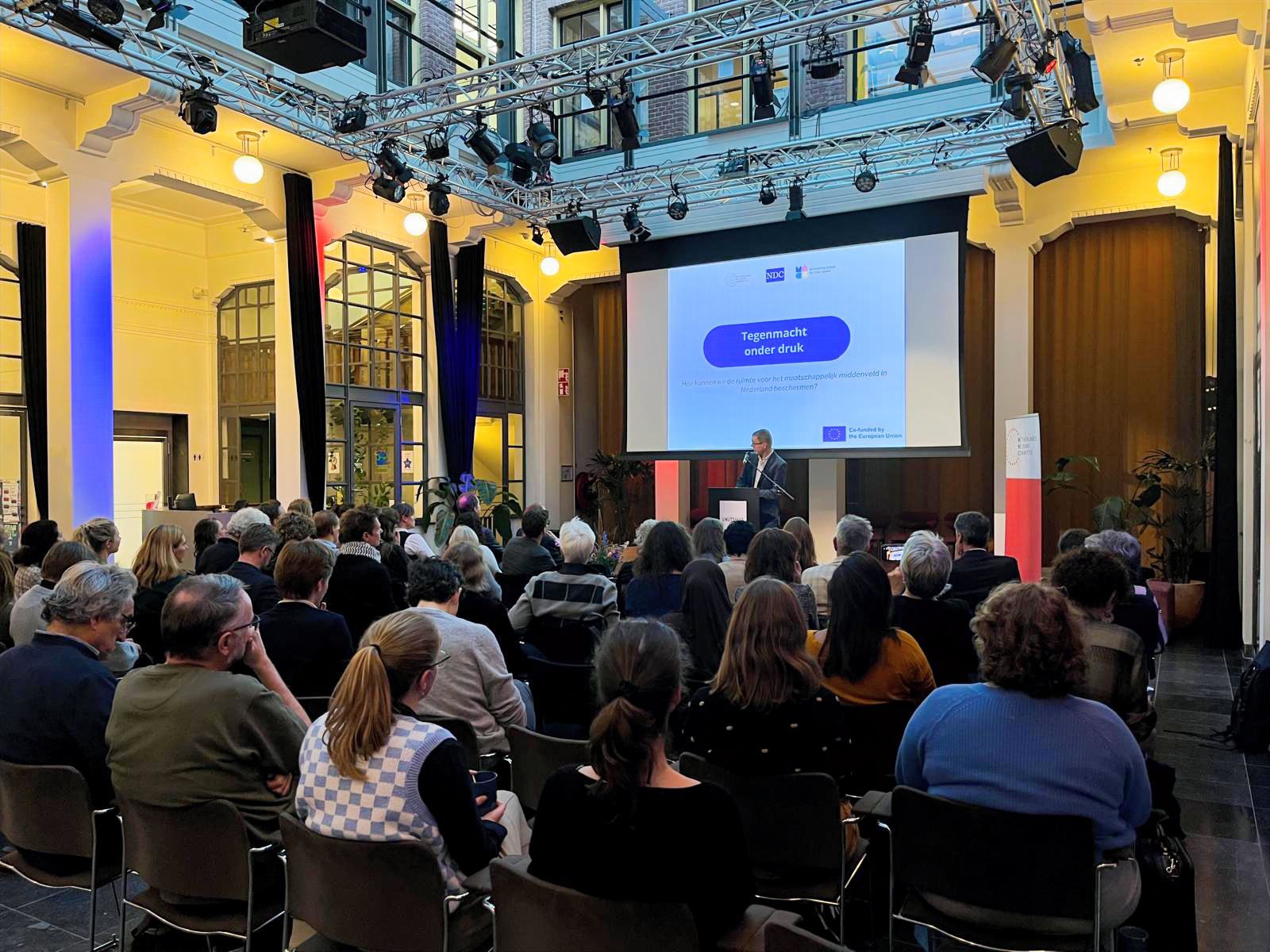
On 24 February, politicians, policymakers, academics, and civil society leaders gathered for the launch of the Monitoring Action for Civic Space (MACS) report and to reflect on the state of civic space in the Netherlands. The discussion made one thing clear: while the democratic institutions in the Netherlands are strong, the space for civil society is increasingly under pressure. Recognising early warning signs and acting on them is essential to ensure that democratic institutions remain resilient.
The event brought together representatives from across sectors to discuss the report’s findings and explore what can be done to strengthen the role of civil society. Participants included Members of Parliament Joost Sneller (D66) and Tijs van den Brink (CDA), as well as Rick Lawson (Netherlands Institute for Human Rights), Anne-Floor Dekker (WO=MEN), and Margreet Plug (GoedeDoelenNederland). Despite coming from differing perspectives, the panellists agreed on one key principle: civil society is not an adversary of the state, but a cornerstone of democratic resilience. A healthy democracy depends on strong countervailing powers.

Global democratic erosion and early warning signs
The broader global context reinforces the urgency of this discussion. In her keynote speech, Professor Sarah de Lange presented data showing that democratic standards worldwide have declined significantly in recent years. According to the latest data from the V-Dem, the global level of democracy has fallen back to levels last seen in 1983. Today, nearly three-quarters of the world’s population lives under authoritarian rule. Even within the group of liberal democracies, worrying trends are emerging. Among the world’s most liberal democratic countries, the Netherlands now ranks 27th out of 29. This places the Netherlands amongst the worst of the best, despite its strong democratic institutions.
Professor de Lange emphasised how democratic erosion rarely happens overnight. Instead, it often unfolds gradually. Research shows that weakening of democratic norms in the long term often has a more serious impact than the direct impact of anti-democratic measures. Even in countries with strong institutions, these early warning signs need to be taken seriously to prevent further democratic decline. One of the most important safeguards against this process is a vibrant and independent civil society. This ‘rule of law from below’, as Professor de Lange points out, is exactly what is being threatened now. Not just in the Netherlands, but globally. Countering democratic erosion requires actively reinforcing democratic norms – by clearly articulating them, setting boundaries, and challenging conduct that undermines democratic principles.
MACS report: findings and recommendations
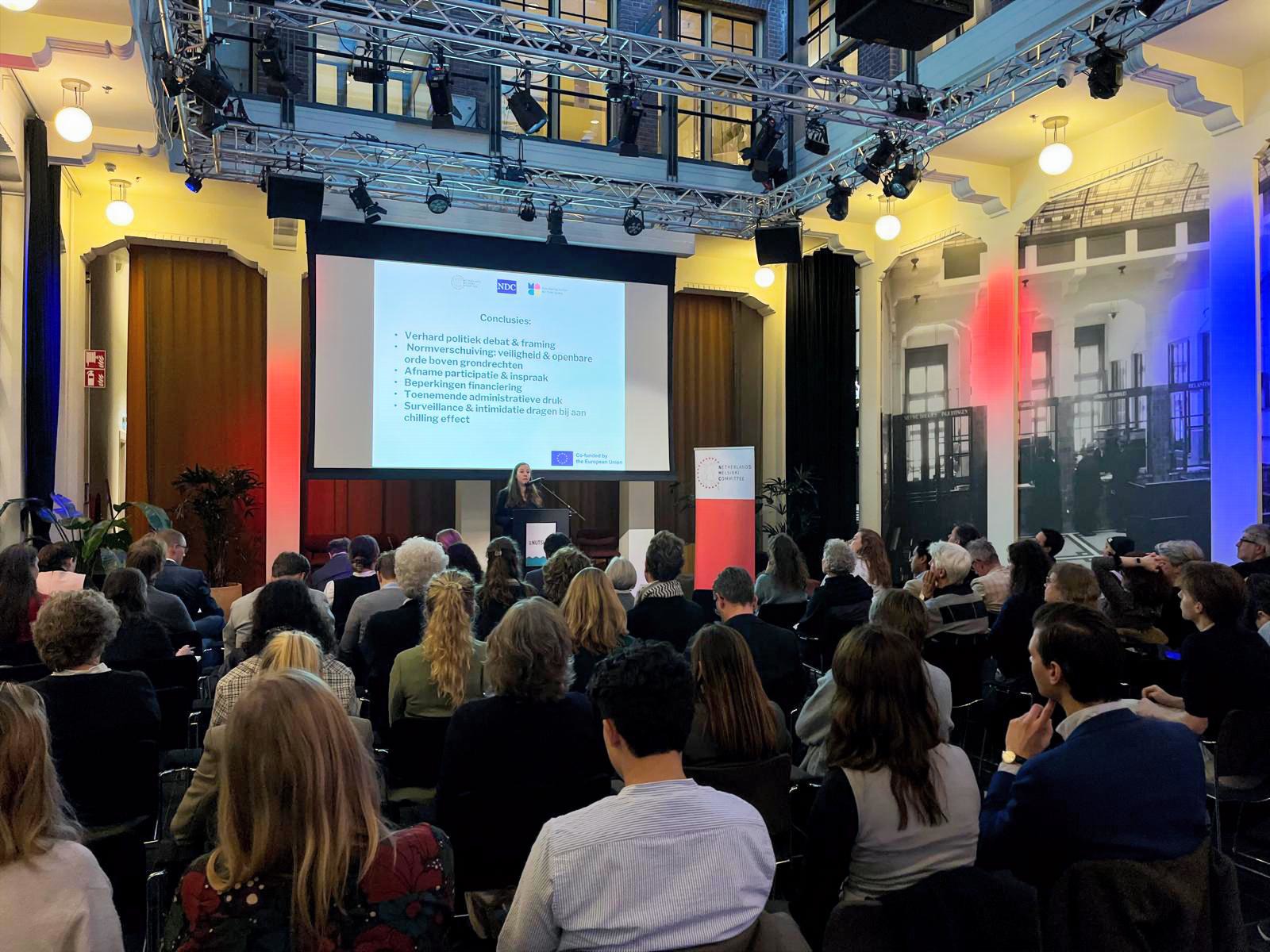
The findings of the MACS report, which were presented by Aicha Chaghouani from NHC, indicate several concerning developments. These include a political discourse in which watchdog CSOs and peaceful activists are framed as disruptive, radical or extremist. Critical CSOs and protest movements are increasingly targeted by motions – receiving a parliamentary majority – that invites the government to adopt measures that violate their rights. A growing number of legislative proposals may restrict fundamental rights without a clear justification of effectiveness, necessity, or proportionality. The fact that these motions and laws are introduced and supported by a wide group of political parties, including the traditionally centrist parties, illustrates the concerning weakening of democratic norms that Professor de Lange also points to. In addition, CSOs face rising administrative burdens, funding constraints, and in some cases, intimidation and surveillance that can create a chilling effect on activism.
The main recommendation of the report is to develop a National Action Plan that strengthens and protects civil society. This Action Plan should be co-designed with civil society, building on the momentum created by the EU Civil Society Strategy. The Action Plan should clearly recognise the vital role of critical watchdogs and peaceful activism, while ensuring strong structures for meaningful participation, financing, and independent monitoring. The Action Plan should include measures to better protect civil society through monitoring and addressing intimidation and attacks. Any new legislation that restricts fundamental rights should be reassessed to ensure strong safeguards for CSOs. Law enforcement should cease disproportionate surveillance of peaceful activists.
During the panel discussion, speakers from different CSO networks highlighted how these pressures affect the everyday work of civil society organisations. Many organisations find themselves spending more time responding to regulatory requirements or political narratives rather than focusing on their core missions. At the same time, questions about the legitimacy of NGOs have been increasingly raised in public debates, even though these organisations often play a crucial role in representing communities that are otherwise underrepresented in policymaking.
Looking ahead: protecting civic space
Prior to the public event, a closed working group session took place with participants from civil society as well as ministries. They met for a more structured discussion and reflection about the findings and recommendations from the report, and ways forward. Opportunities were identified in upcoming political moments, including last year’s EU Civil Society Strategy and the Netherlands’ future presidency of the Council of Europe. Looking ahead, participants stressed that an Action Plan should focus on the enabling conditions for civil society, including funding, protection, and structured institutional dialogue, while recognising the diversity within the sector and the need to invest in networks to bring together different types of organisations and movements to ensure all voices are heard.
The key takeaway from the MACS event is both cautious and hopeful. The Netherlands remains a strong democracy, but democratic resilience cannot be taken for granted. Recognizing early warning signs and actively supporting civil society are essential steps in ensuring that democratic institutions remain strong. As the panel discussion made clear, protecting civic space is not only the responsibility of civil society itself – but it also requires a collective commitment from government, policymakers, and society as a whole.